Private yoga therapy for nervous system regulation and reconnection
One-to-one support for people living with anxiety, trauma, grief, depression, chronic stress and overwhelm. Sessions draw on embodied movement, breathwork and deep rest — at a pace that honours your body and story. Online and in London, ON.
BOOK A FREE CONSULTATION »
You don’t need to know exactly how this works before reaching out.
Many people come to private yoga therapy feeling unsure.
They may feel vulnerable, exhausted, disconnected from their bodies, or discouraged after trying other forms of support that did not fully help. Sometimes they have been coping for a long time. Sometimes talking has helped, but something still feels stuck. Sometimes they are simply looking for a different kind of support.
If that is where you are, you are not alone.
This work begins gently. You do not need to be flexible, experienced with yoga, or ready to do anything intense. We begin by listening inward and working with what is here.
Learn more about Yoga Therapy »
For many people, healing does not happen through insight alone. It also involves the body, the breath, and the nervous system.
Private yoga therapy is different from a regular yoga class because it is shaped around you. Rather than asking you to fit into a preset sequence, keep up with a group, or follow a pre-recorded or YouTube class, we work together to explore practices that support regulation, awareness, and reconnection in ways that feel manageable and supportive.
This can be especially important if group yoga has felt overwhelming, activating, or simply not like the right fit.
How private yoga therapy can feel different
PERSONALIZED
Each session is shaped around your needs, your pace, and your lived experience.

COLLABORATIVE
We pay attention to what feels supportive, what does not, and what your body may be communicating.
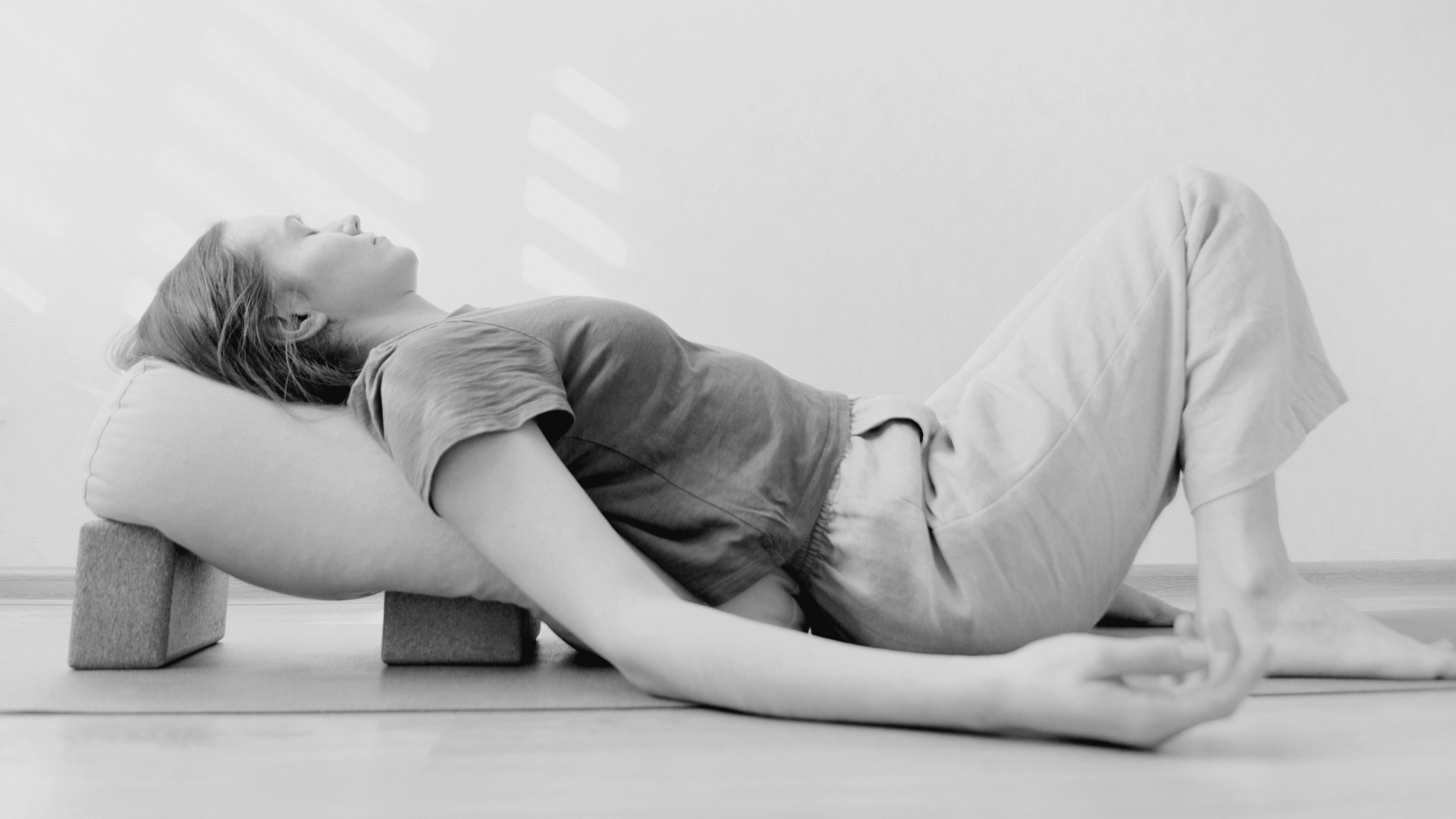
GENTLE
This work is not about pushing. It is about creating the conditions for steadiness, safety, and healing.
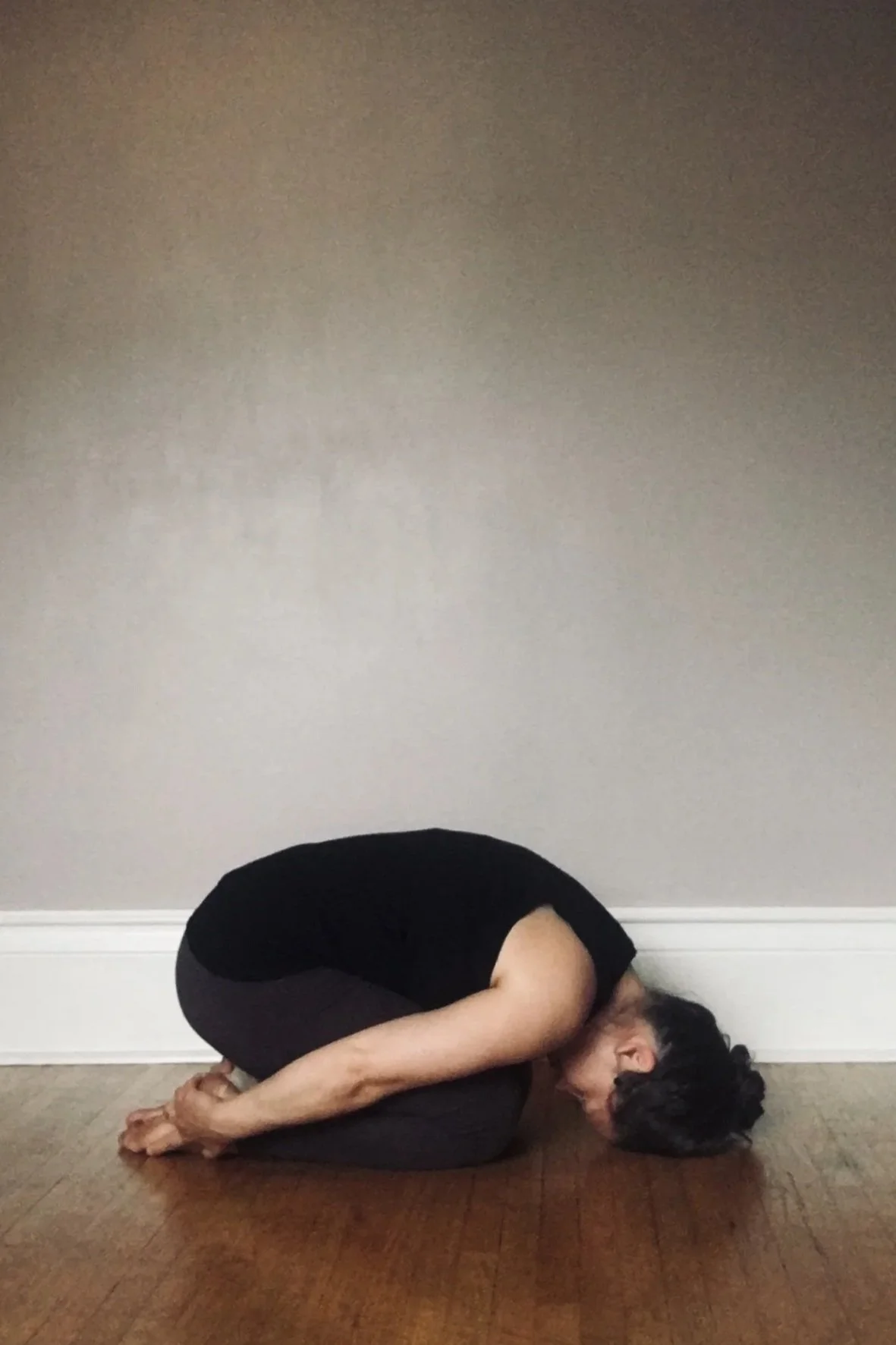
How private yoga therapy supports nervous system regulation
Private yoga therapy offers one-to-one support for people living with anxiety, trauma, grief, depression, chronic stress, or nervous system overwhelm.
Drawing from yoga therapy, somatics, breathwork, restorative practice, and embodied awareness, sessions are designed to help you build a different relationship with stress, emotions, and your body.
It is a different kind of healing space — one that recognizes that many emotional struggles are felt in the mind, and the body, and that the body is essential to healing.
Together, we work with practices that create a sense of curiosity and creativity. Where you can develop tools that can help you build awareness, steadiness, and capacity, and learn regulation through the ease rather than through force, performance, or pressure.
Schedule a free consultation to see if private yoga therapy is right for you.
What to Expect in a Yoga Therapy Session
Trying something new can bring up uncertainty, especially when you are already feeling vulnerable. My intention is to make the process feel as clear, welcoming, and at-ease as possible.
BEFORE WE MEET

We begin with a free consultation. This is a chance for you to share a little about what is bringing you here, ask questions, and get a feel for whether this work seems like a good fit.
YOUR FIRST SESSION
The first session is a place to begin gently. We talk about what is bringing you to yoga therapy, what you are hoping for, and what feels important for me to understand. You do not need to share trauma details in order for us to work meaningfully together.
THE PRACTICES
Depending on your needs, we may explore simple practices involving breath, movement, rest, awareness, or guided support that you can continue with between sessions in ways that feel realistic and manageable.
What this work can support
Private yoga therapy may support you if you are living with:

Anxiety that feels constant, loud and hard to settle.

Grief or loss that is living strongly in your body.

Trauma that has left you feeling activated, disconnected or unlike yourself.
Depression that leaves you feeling heavy numb and blocked.

Overwhelm, shutdown, exhausted and les able to cope.
A sense that other forms of support have helped but still something feels missing.
Often, people arrive here not because they believe embodied practices will fix them, but because they are looking for a different way to relate to what they are carrying.
A compassionate, evidence-informed approach
This work is rooted in the understanding that healing is not just about understanding what you feel. It is also about learning how to be with what you feel in the body.
Through embodied awareness, breath, movement, and deep rest, yoga therapy can help create space for nervous system regulation, emotional processing, and reconnection. The focus is not on performing wellness or pushing yourself toward change. It is on creating the conditions that support healing, steadiness, and a more connected relationship with yourself.
We begin with what is here. We move at a pace that honours your capacity. Over time, that can become the foundation for meaningful change.
Who you’ll be working with

Hi, I’m Katlin
I’m a yoga therapist and educator specializing in nervous system regulation. My work integrates yoga therapy, breathwork, restorative practices, and somatic movement that create embodied awareness to support people suffering from stress, overwhelm and burn-out.
Many of the people I work with are living with anxiety, trauma, grief and depression.
I bring a grounded, compassionate approach to this work, with care that is shaped by both professional training and deep respect for the complexity of lived experience.
Learn more about my background and approach.
You don’t have to know for certain before reaching out

A free, no pressure, consultation gives you space to ask questions, share a little about what is bringing you here, and get a feel for whether private yoga therapy feels like the right next step.
EMAIL ME WITH QUESTIONS »
FAQ: Private yoga therapy for nervous system regulation
-
No. Private yoga therapy is perfect if you have never taken a yoga class. Each session is personalized based on your needs, ability and preferences.
-
Starting something new can feel uncertain, especially when you are already feeling vulnerable. Private yoga therapy is designed to be a gentle, unhurried space. There is no pressure to do anything that does not feel right, and we always work at a pace that feels supportive and safe for you specifically
Starting with a free consultation allows us to meet before we begin and most often helps people feel more at ease.
-
No. You will never be asked to share the details of your lived experience. It is often helpful to know your background but there is not need to disclose the details unless you feel like that would be supportive.
-
This varies depending on what you are working with. Many people find that regular sessions over several months build meaningful nervous system regulation and capacity. We discuss structure and pace during the free consultation so you can begin with clarity and without pressure."
It can be helpful to join one of my group classes simultaneously to reinforce the tools we are practicing.
-
Yes. Private yoga therapy sessions are available online throughout North America. In-person sessions are also available in London, Ontario. Online sessions follow exactly the same approach as in-person work and are equally effective for nervous system regulation and embodied awareness."
-
Yoga therapy is not typically covered by standard health insurance in Canada, though some extended health plans include coverage for complementary or alternative care. Check directly with your provider. Documentation can be provided to support any reimbursement claims you choose to make.
I have worked with several clients who have been in motor vehicle accidents that insurance covers and can work with your provider to facilitate your claim.
-
Yes, all Certified Yoga Therapists must abide by the professional code of ethics which includes confidentiality.
Aside from my professional requirements I deeply understand that confidentiality is essential for anyone entering a vulnerable space to feel safe.
-
You’ll be given options from the start, including ways to pause, re-orient, or rest. You’re encouraged to choose what feels supportive. I have extensive experience working with trauma and working with strong emotions.
-
Yoga therapy is not a replacement for mental health care. It can be a powerful complement. If you’re currently working with a therapist, many people find this supports that work.
-
If you’re in immediate danger or need urgent support, contact local emergency services. In Canada, you can call/text 988 for suicide crisis support.
Yoga therapy is not suitable for people experiencing a mental health crisis.
-
Many people join because of panic, “what if” thoughts, and chronic stress activation. Practices focus on steadiness, grounding, and downshifting—always with options (especially if breathwork feels activating).
For most people yoga works best if it is practiced regularly and as a complimentary practice that you can use along with medical treatment and/or psychotherapy.
-
You’re not alone—for some people paying attention to the breath can exacerbate anxiety. My approach is to go slowly and build skills around awareness.We often start with gentle breath skills plus non-breath alternatives (somatic movement, grounding, orienting, movement, and rest) so you can choose what helps in the moment.
-
Many people with trauma histories benefit from choice-based, trauma-informed practice. If you’re unsure, book a free consult to talk it through.
-
Overall, the evidence supports yoga, guided meditation and breath-based practices as helpful, low-risk complements for many people living with anxiety, stress, and trauma symptoms.
Here is a sample of some of the research supporting yoga (and related practices) for anxiety and trauma
The tools in this series are evidence-informed and commonly used as supportive complements for anxiety, stress, and trauma-related symptoms. Research quality varies by study, population, and protocol—so we avoid “miracle claims” and focus on approaches that are low-risk, choice-based, and adaptable.
Yoga + Anxiety
Cramer, H., Lauche, R., Anheyer, D., Pilkington, K., de Manincor, M., Dobos, G., & Ward, L. (2018). Yoga for anxiety: A systematic review and meta-analysis of randomized controlled trials.Depression and Anxiety, 35(9), 830–843. https://doi.org/10.1002/da.22762 PubMed
Yoga + PTSD (Trauma Symptoms)
Nejadghaderi, S. A., Mousavi, S. E., Fazlollahi, A., Asghari, K. M., & Garfin, D. R. (2024). Efficacy of yoga for posttraumatic stress disorder: A systematic review and meta-analysis of randomized controlled trials.Psychiatry Research, 340, 116098. https://doi.org/10.1016/j.psychres.2024.116098PubMed
Trauma-Sensitive Yoga Compared with Evidence-Based Psychotherapy (Women Veterans)
Zaccari, B., Higgins, M., Haywood, T. N., Patel, M., Emerson, D., Hubbard, K., Loftis, J. M., & Kelly, U. A. (2023). Yoga vs Cognitive Processing Therapy for Military Sexual Trauma–Related Posttraumatic Stress Disorder: A randomized clinical trial.JAMA Network Open, 6(12), e2344862. https://doi.org/10.1001/jamanetworkopen.2023.44862 PubMed
Breathwork + Stress/Anxiety Outcomes
Fincham, G. W., Strauss, C., Cavanagh, K., & Kuyken, W. (2023). Effect of breathwork on stress and mental health: A meta-analysis of randomised-controlled trials.Scientific Reports, 13, 432. https://doi.org/10.1038/s41598-022-27247-yNature
Bentley, T. G. K., D’Andrea-Penna, G., Rakic, M., Arce, N., LaFaille, M., Berman, R., Cooley, K., & Sprimont, P. (2023). Breathing Practices for Stress and Anxiety Reduction: Conceptual framework of implementation guidelines based on a systematic review of the published literature.Brain Sciences, 13(12), 1612. https://doi.org/10.3390/brainsci13121612PMC
Yoga Nidra-Style Guided Rest + Stress/Anxiety/Depression Outcomes
Ghai, S., Odyniec, P., & Ghai, I. (2025). Effects of Yoga Nidra on Stress, Anxiety, and Depression: A systematic review and meta-analysis.Annals of the New York Academy of Sciences (online ahead of print). https://doi.org/10.1111/nyas.70149 PubMed
-
Private yoga therapy offers a great degree of collaborative exploration. Practices are customized to your ability and preferences.
Most yoga classes are generic rather than individualized. The focus on helping you understand what works for YOU. We not only practice yoga, we talk about why some things work and others might not. In time you should be able to join any yoga class and modify the practice to suit your needs.
-
You will need a yoga mat, chair (folding is great so you can move it closer to you but any chair will do), a blanket or firm pillow.
I also recommend yoga blocks but they are not essential.
You will need a camera for your video and a quiet space to practice.
If you have family or roommates it is a good idea to let them know that this is important quiet time for you and noise should be minimal.
-
Yes—yoga therapy can be extremely helpful for chronic conditions and pain. It offers both physiological support and nervous system regulation - which is often accompies chronic conditions.