What to expect in a yoga therapy session
I recognise that reaching out when you are already feeling distress takes courage. Trying something new with someone you haven't met yet can bring its own uncertainty.
My intention is to make the process feel as clear, welcoming, and at ease as possible — for every body, background, and circumstance.
A yoga therapy session begins with a conversation about what brings you here, then moves into gentle, body-based practices tailored to your nervous system and needs. Sessions run 75–90 minutes. No yoga experience is required. You won't be asked to do anything intense — we begin gently, wherever you are.
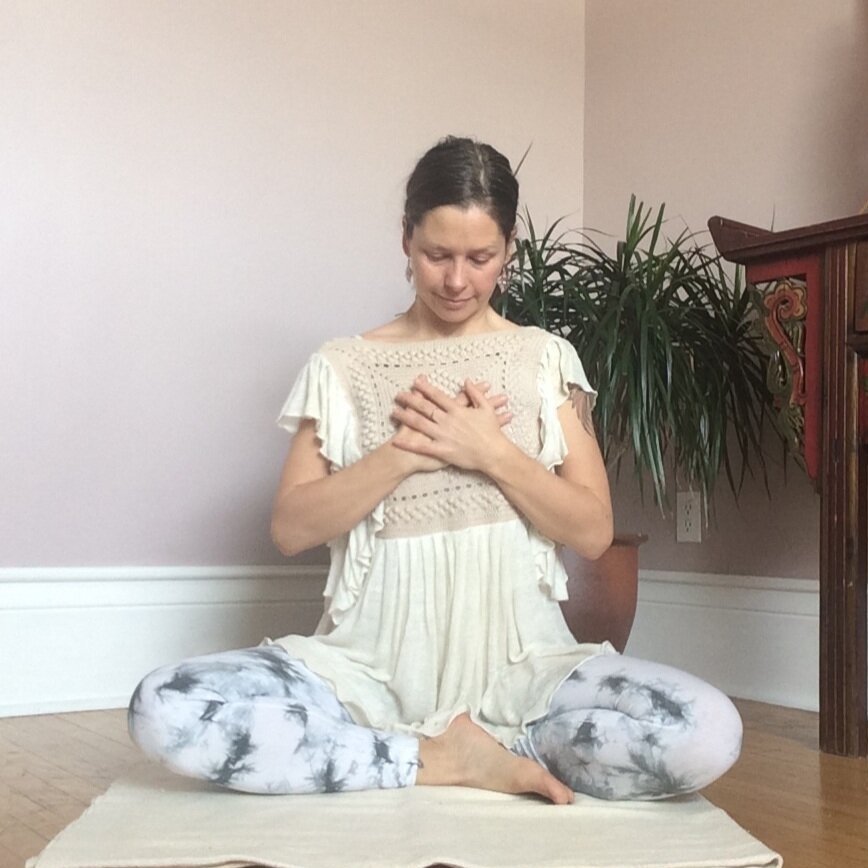
Where we begin
BEFORE WE MEET IN PERSON

The process begins with the first phone conversation where we will chat about your situations. I will ask some basic questions and you will be given lots of time to ask questions. After our conversation you can decide if Yoga Therapy seems like a good fit for you.
Before your first appointment you will be given an intake form, which is very much like an intake form you might get from a Massage Therapist or Psychotherapist. I use this to help prepare for our first appointment.
OUR FIRST SESSION
Yoga Therapy is based on the belief that every person and situation is uniquely different. It is impossible to say exactly how a session will unfold. With this in mind, the following will give you a general idea of what to expect.
At our first appointment we will meet online or at my home studio in Old South London, Ontario.*
Our session will begin by reviewing your intake, giving you an opportunity to talk about what brought you to Yoga Therapy and your goals. We will spend time chatting about what's happening in your body and emotions. We may also discuss what’s happening in your day-to-day life that could be contributing to physical and emotional stress. If you have experienced trauma you won’t be asked to go into details of the incident(s). However, providing high-level details can help guide our time together. I have extensive experienced working with trauma survivors and am openly willing to listen to your story if it will serve you.
Depending on your goals we will look at your physical holding patterns and imbalances (where do you carry stress?). Physical holding patterns and areas of tension are often connected to how the body and nervous system responds to stress, emotion, and lived experience. Noticing where you carry tension in the body can be a meaningful starting point for this work.
During the session we will try a few practices that you can practice at home. The home practice is always based on the time you have available and what you felt was most beneficial.
*There is ample parking and it is easily accessible from three major bus routes. Unfortunately it is not mobility accessible. If you need an accessible space we can discuss options during your free consultation call.
FOLLOW-UP SESSIONS
Follow-up sessions begin with a check-in to see what has worked and what we can change. This is typically followed by gentle movement. Depending on your needs, we may work with breathwork for nervous system regulation, yoga nidra for deep rest and anxiety relief, meditation, guided relaxation, and embodied awareness practices.
I also offer psychoeducation on how the nervous system shapes our experience of stress, emotion, and healing. Many people find this context very helpful for better understanding how their body and mind react during periods of distress.
FAQ: What to expect in a yoga therapy session
-
No. Private yoga therapy sessions are designed to be accessible regardless of your background or physical ability. You don't need to be flexible, experienced, or familiar with yoga. Sessions begin gently, at a pace that honours your body and your capacity.
-
In a regular yoga class, everyone follows the same sequence. In yoga therapy, the session is shaped entirely around your nervous system, your history, and your goals. There is no set sequence to follow and no need to keep pace with anyone else. This makes it particularly supportive for people working with anxiety, trauma, grief, depression, or chronic stress.
-
Yoga therapy is not typically covered by standard health insurance in Canada, though some extended health plans include coverage for complementary or alternative care. Check with your provider directly. Documentation can be provided to support any reimbursement claims you choose to make.
-
This varies depending on what you are working with. Many people find that regular sessions over several months build meaningful nervous system regulation and capacity. We discuss structure and pace during the free consultation so you can begin with clarity and without pressure.
-
Yoga therapy prices are comparable to other complimentary care like massage therapy, physiotherapy and osteopathy.
You can find my rates and packages HERE.
-
A free consultation is a 20–30 minute conversation where you share what brings you here, ask questions, and get a sense of whether this work feels like a good fit. There is no pressure or obligation — just a chance to connect and explore before committing to anything.
You can schedule a free consultation at https://www.katlinrobinson.com/contact